.jpeg)

Pro Gear Advisers
•866-498-7882
Top 10 Acoustic Guitars for Blues

In this guide, we’ve rounded up ten of the most inspiring acoustic guitars for blues players—from vintage-style small bodies and 12-fret beauties to stage-ready resonators and signature models with serious roots. Whether you’re a front-porch picker, a slide player or just looking for an acoustic that knows how to groan and growl when you dig in, these guitars have the mojo.
Long before Muddy Waters plugged in and electrified the world, the blues lived solely in the hands, voice and wood (or brass and steel) of an acoustic guitar.
From the raw intensity of Charley Patton and the haunting lyricism of Blind Lemon Jefferson, through the shadowy mystique of Robert Johnson and the gentle poetry of Skip James, the acoustic blues tradition was forged in hardship, storytelling and soul.
Whether it was Mississippi John Hurt’s delicate fingerpicking or the warm, modern phrasing of contemporary blues artists like Keb’ Mo’, the acoustic guitar has remained the blues’ most faithful companion—portable, honest and endlessly expressive.
While the genre has evolved, the need for a responsive, soulful instrument hasn’t changed. Today’s best-selling and most popular acoustic guitars for blues honor that lineage while offering modern reliability and versatility.

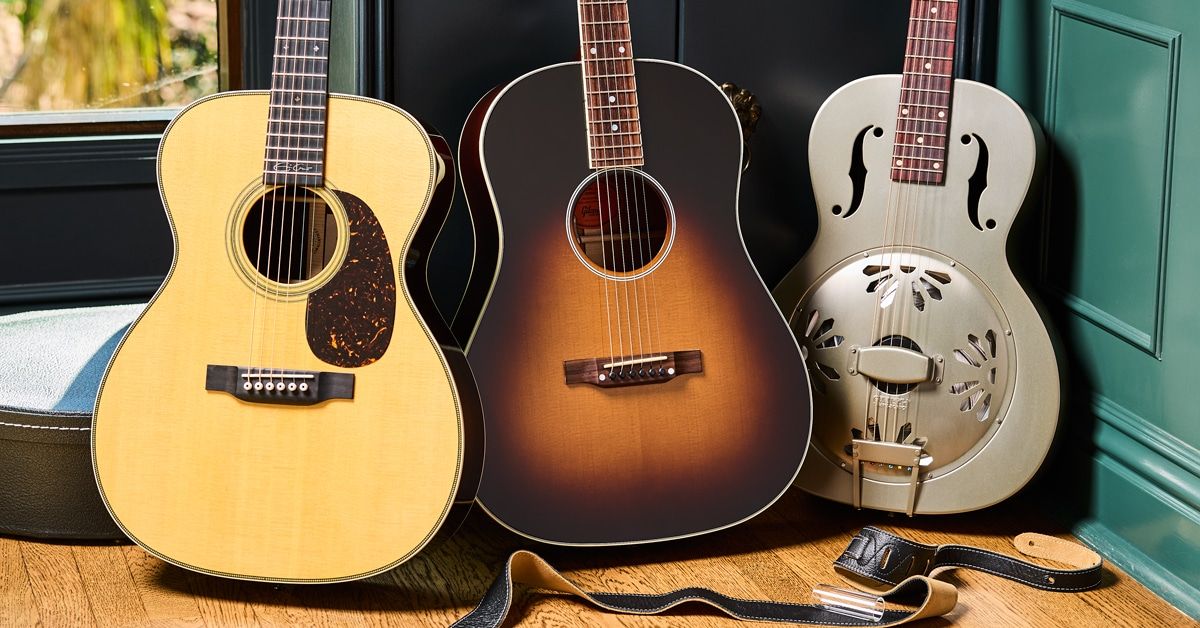
Headstocks Left to Right: Martin 000-28EC, Gretsch G9201 and Gibson Keb' Mo' J-45
Table of Contents
How to Choose an Acoustic Guitar for Blues
Comparing the Best Acoustic Guitars for Blues
The Top Acoustic Guitars for Blues
Final Thoughts: Finding Your Blues Sound
People Also Ask
How to Choose an Acoustic Guitar for Blues
Blues is an expressive style, and the guitar becomes an intermediary in that conversation between your emotions and the listener. Rather than looking for a single “best” blues guitar, it’s worth understanding how different designs respond to different players.
Body Size
Smaller-bodied instruments like 00, 000 and L-00 models tend to produce a focused midrange with quick note attack, making them favorites for fingerstyle blues where clarity and articulation matter. Larger guitars such as dreadnoughts and jumbos generally offer greater bass response and headroom, remaining articulate under a heavier attack while providing plenty of support for singing.
Tonewoods
Mahogany is prized for its warm, woody voice and focused midrange, making it a longtime favorite for traditional blues, fingerstyle playing and intimate vocal accompaniment. Spruce tops add clarity, articulation and dynamic range, responding equally well to a delicate touch or a more assertive attack. Rosewood contributes greater bass depth, shimmering overtones and harmonic complexity, creating a broader, more expansive voice that works beautifully for solo performers and singer-songwriters. You may even find the occasional cedar-topped guitar in the mix, which is softer and warmer than mahogany or spruce tops, but with a faster decay.
12-Fret or 14-Fret?
One of the biggest differences between acoustic blues guitars has nothing to do with tonewoods or body size—it’s where the neck joins the body. On a 12-fret guitar, the neck meets the body two frets sooner than on the more common 14-fret design. That shifts the bridge farther down toward the center of the soundboard, allowing more of the top to vibrate. The result is generally a rounder, fuller voice with a slightly softer attack and a more pronounced bass response. A 14-fret guitar moves the bridge closer to the soundhole, producing a quicker, more immediate response with greater articulation and upper-midrange presence.
Resonator or Traditional Acoustic?
A wooden flattop often sounds warm, intimate and conversational, while a resonator commands attention with a voice that’s brash, expressive and impossible to ignore. Resonators quickly found a home in the blues, where their bright voice and long sustain paired naturally with bottleneck and slide techniques.
Electronics
Whether you choose an acoustic guitar with built-in electronics depends largely on where—and how—you plan to play. If most of your playing happens at home, in the studio or around a campfire, onboard electronics may never enter the equation. But if you regularly perform live, an integrated pickup system offers convenience, consistency and the freedom to move around the stage without relying on microphones.
The guitars in this guide span all of these approaches. Some lean toward traditional Delta blues, others bridge the gap between roots, Americana and contemporary acoustic performance. The right choice isn’t about chasing authenticity—it’s about finding the instrument that inspires you to play.
Comparing the Best Acoustic Guitars for Blues

Pictured: Gibson Keb' Mo' 3.0 12-Fret J-45 Signature Acoustic-Electric Guitar Soundhole Label
|
Model |
Body/Neck Material |
Fretboard |
Neck Shape |
Tonal Characteristics |
Price* |
|
Nickel-plated Bell Brass/Mahogany |
Padauk |
Medium V |
Bright, metallic, resonant |
$999.99 |
|
|
Mahogany/Mahogany/Mahogany |
Ebony |
Round |
Loud, metallic, slide-friendly |
$4,770.00 |
|
|
Sitka Spruce/Mahogany/Mahogany |
Rosewood |
Medium C |
Warm, balanced and vocal with medium attack |
$2,499.99 |
|
|
Thermally Aged Sitka Spruce/Mahogany/Mahagony |
Rosewood |
Custom Keb’ Mo’ Profile |
Warm, rich, articulate |
$4,299.00 |
|
|
Thermally Aged Sitka Spruce/Mahogany/Mahogany |
Rosewood |
SlimTaper |
Crisp, focused, vintage tone |
$2,999.00 |
|
|
Sitka Spruce/Mahogany/Mahogany |
Ebony |
GE Modified Low Oval |
Balanced, articulate, clear |
$2,999.00 |
|
|
Mahogany/Mahogany/Mahogany |
Indian Rosewood |
Modified Low Oval |
Warm, woody, vintage tone |
$2,099.99 |
|
|
Sitka Spruce/East Indian Rosewood/Mahogany |
Ebony |
Modified V |
Rich, balanced, expressive |
$4,199.99 |
|
|
Engelmann Spruce/Guatemalan Rosewood/Mahogany |
Ebony |
Low Profile |
Lush, detailed, premium tone |
$18,499.00 |
|
|
Torrefied Sitka Spruce/Indian Rosewood/Neo-tropical Rosewood |
Ebony |
GS Mini Profile |
Compact, bright, versatile |
$899.00 |
Pricing as of July 2026*
The Top Acoustic Guitars for Blues

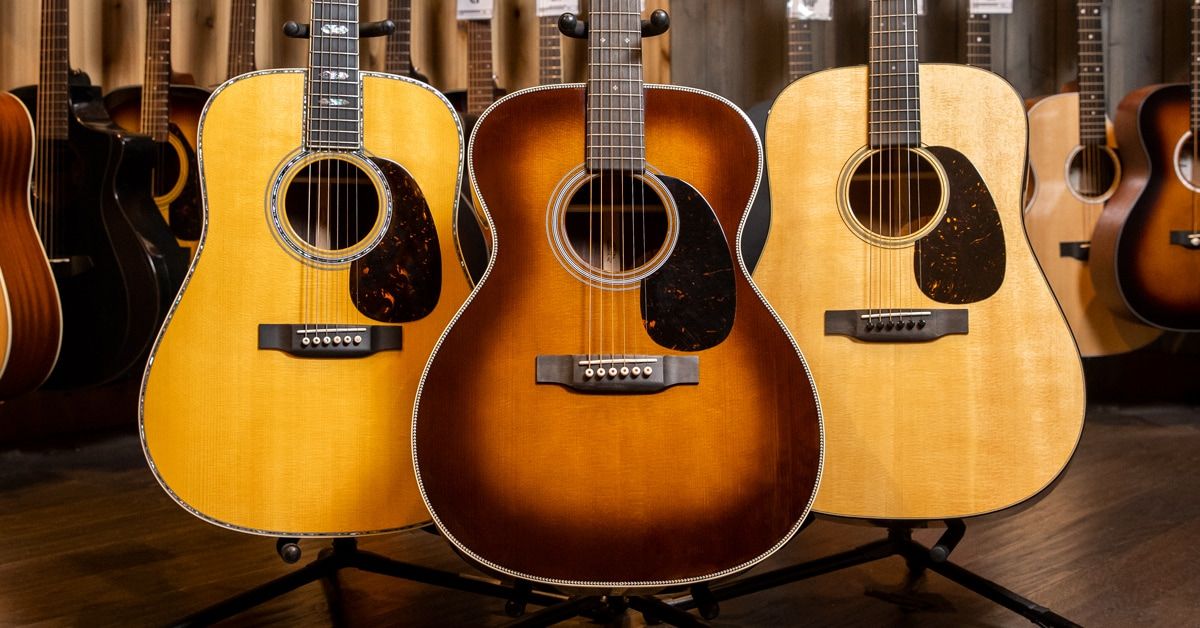
Pictured: Martin 000-28EC Eric Clapton Signature Auditorium Acoustic Guitar in Natural
Gretsch G9201 Honey Dipper Round-Neck Resonator
What to Know
-
An affordable introduction to the resonator sound
-
Excellent for Delta blues, slide and roots music
-
Delivers the unmistakable bark and bite that define classic resonator guitars

Shop Now: Gretsch G9201 Honey Dipper Round-Neck, Brass Body Biscuit Cone Resonator
Whether you’re exploring bottleneck slide for the first time or simply want a different voice in your collection, the Gretsch Honey Dipper captures the raw, expressive character that has made resonator guitars a blues staple for nearly a century. With its brass body and biscuit bridge, it throws notes like gravel—loud, metallic, and immediate. Originally designed for projection before there was amplification, the resonator’s metallic voice became one of the defining sounds of Delta slide guitar. Its lively response rewards everything from driving Delta rhythms to fingerpicked country blues, making it an inspiring choice for players looking to expand their sonic palette without breaking the bank.
National El Trovador Resonator
What to Know
-
Premium resonator for serious slide and fingerstyle players
-
Rich, articulate voice with exceptional projection
-
Built for players who appreciate traditional craftsmanship and modern refinement

Shop Now: National El Trovador Resonator Guitar in Natural
The National El Trovador shows just how sophisticated that world of resonators can become. It delivers the unmistakable projection and harmonic richness that made National legendary, but with a level of refinement that rewards a nuanced touch as much as an aggressive slide attack. It’s equally at home accompanying a singer-songwriter, carrying a solo instrumental performance or delivering the haunting, vocal quality that has defined resonator blues for generations.
Gibson J-185 Century 12-Fret Acoustic Guitar
What to Know
-
Ideal for singer-songwriters and accompanists
-
Big, balanced voice without sacrificing clarity
-
Handles strumming and fingerstyle with equal confidence

Shop Now: Gibson J-185 Century 12-Fret Acoustic Guitar in Vintage Sunburst
The Gibson J-185 Century 12-Fret occupies a sweet spot in Gibson’s lineup, delivering much of the power and projection of a jumbo while remaining balanced enough for more nuanced playing. Its 12-fret construction contributes to its relaxed, vocal quality, making it particularly rewarding for expressive fingerstyle playing while still providing enough headroom for confident strumming. It’s a natural fit for performers who divide their time between rhythm work, fingerstyle passages and vocal accompaniment, offering the headroom to dig in without overwhelming the music.
Gibson Keb' Mo' 3.0 12-Fret J-45
What to Know
-
Designed for contemporary acoustic blues and fingerstyle
-
Comfortable, player-focused design with vintage inspiration
-
A versatile choice for performers who move between blues, folk and Americana

Shop Now: Gibson Keb' Mo' 3.0 12-Fret J-45 Signature Acoustic-Electric Guitar in Vintage Sunburst
The Gibson Keb’ Mo' signature model blends the warmth and intimacy of a traditional blues guitar with features designed for today’s working musician. It’s equally comfortable accompanying a vocal, exploring intricate fingerstyle arrangements or stepping into contemporary Americana, making it an excellent choice for players who value versatility as much as tradition.
Gibson L-00 Standard
What to Know
-
A classic choice for traditional acoustic blues
-
Focused midrange with outstanding note definition
-
Excels at fingerstyle, ragtime and country blues

Shop Now: Gibson L-00 Standard Acoustic-Electric Guitar in Vintage Sunburst
Few guitars are more closely associated with acoustic blues than the Gibson L-00. The compact body echoes many of the instruments heard on classic pre-war blues recordings, and its balanced voice keep alternating bass lines, fingerpicked melodies and ragtime-inspired passages remarkably articulate without sacrificing warmth. If you’re chasing the intimate sound of pre-war blues recordings, this is one of the benchmarks against which so many other guitars are measured.
Martin 00-18 Standard
What to Know
-
An exceptional choice for fingerstyle and traditional blues
-
Responsive, articulate voice with remarkable balance
-
Comfortable size that encourages expressive playing

Shop Now: Martin 00-18 Standard Grand Concert Acoustic Guitar in Natural
The Martin 00-18 is one of those guitars that seems to disappear beneath your hands, letting your technique and dynamics take center stage. Its balanced voice and quick response make it equally satisfying for intricate fingerstyle arrangements, ragtime-inspired blues and singer-songwriter accompaniment. If nuance matters more than sheer volume, the 00-18 delivers in abundance.
Martin 000-15SM
What to Know
-
A favorite for fingerstyle players and traditional blues
-
Warm, woody voice with vintage-inspired character
-
The 12-fret design rewards a relaxed, expressive touch

Shop Now: Martin 000-15SM Auditorium All-Mahogany Acoustic Guitar in Natural
The Martin 000-15SM invites a slower, more deliberate approach to playing. The all-mahogany construction reinforces the dry, woody character many players associate with traditional acoustic blues. Its warm, intimate voice and effortless responsiveness make it a natural companion for country blues, folk and solo performance, rewarding subtle dynamics and expressive phrasing rather than aggressive attack. In fact, you can think of the 12-fret neck joint as shaping the guitar’s phrasing. It’s the kind of guitar that encourages you to linger over every note.
Martin 000-28 Eric Clapton Signature
What to Know
-
A modern classic inspired by one of the world’s most influential acoustic players
-
Rich, balanced voice suited to blues, folk and contemporary fingerstyle
-
An excellent choice for players seeking versatility with vintage character

Shop Now: Martin 000-28EC Eric Clapton Signature Auditorium Acoustic Guitar in Natural
The Martin 000-28EC has earned its reputation by doing nearly everything well. It combines warmth, clarity and exceptional balance, making it equally comfortable for fingerpicked blues, flatpicked leads and vocal accompaniment. Whether or not you’re an Eric Clapton fan, it’s easy to understand why this model has become one of Martin’s most enduring signature guitars.
Martin OM-45 John Mayer Signature
What to Know
-
A premium instrument for players who demand exceptional nuance
-
Outstanding dynamic range and tonal complexity
-
Built for expressive fingerstyle, solo performance and sophisticated accompaniment

Shop Now: Martin Limited-Edition OM-45 John Mayer Signature Acoustic Guitar in Gray Sunburst
The Martin OM-45 John Mayer rewards a thoughtful player with extraordinary detail and responsiveness. Every change in attack, every subtle shift in dynamics and every touch of vibrato is reflected in its remarkably expressive voice. While it’s capable of handling virtually any style, it’s especially well suited to musicians who see the acoustic guitar as an extension of their own musical personality rather than simply an accompaniment instrument.
Taylor GS Mini-e Rosewood Sunset Blvd
What to Know
-
A compact guitar that’s equally at home on the couch, the campsite or the stage
-
Comfortable size with a surprisingly full voice
-
An excellent choice for beginners, travelers and experienced players alike

Shop Now: Taylor GS Mini-e Rosewood Sunset Blvd Acoustic-Electric Guitar in Sunset Edgeburst
The Taylor GS Mini-e Rosewood Sunset Blvd proves that great blues tone doesn’t require a large body—or a large investment. Its compact dimensions make it easy to play for hours, while its balanced, surprisingly robust voice is equally at home with fingerstyle blues, flatpicking and singer-songwriter accompaniment. The blues has never cared much about the size, price or pedigree of the instrument—only what the player had to say. The GS Mini carries that tradition forward in a remarkably approachable package.
Final Thoughts: Finding Your Blues Sound

Pictured: Gretsch G9201 Honey Dipper Round-Neck, Brass Body Biscuit Cone Resonator
Blues may have gone electric in Chicago, but it was born on back porches, under open skies, and in the hands of players armed with nothing but a voice, a story, and a wooden box with six strings. Acoustic blues guitars carry that legacy forward—not as museum pieces, but as living instruments that still inspire new songs, new voices, and new players every day.
Whether you’re drawn to the metallic snap of a resonator, the warmth of a 12-fret mahogany body, or the balanced tone of a classic spruce-and-rosewood combo, the right acoustic guitar doesn’t just play the blues—it knows it.
Each of these instruments brings its own take on a timeless tradition. And if you’re still searching for yours, your personal Gear Adviser and the knowledgable associates at your local Guitar Center are always ready to help you find your sound.
The truth of the blues isn’t in the gear—it’s in how you use it. But with the right guitar under your fingers, that truth gets a little easier to tell.
People Also Ask
Can you learn to play the blues on any acoustic guitar?
Absolutely. Certain body styles and tonewoods have become closely associated with traditional blues, but this was a forced choice in many cases. Many of the earliest blues musicians made timeless music on inexpensive, small-bodied instruments, simply because that’s what was available. Today’s players have more choices, but the lesson remains the same: The most important factor is finding a guitar that feels comfortable and inspires you to play. Technique, expression and feel matter far more than owning a particular model.
Do I need a resonator guitar to play slide blues?
Not at all. Resonators were originally developed to make acoustic guitars louder before electronic amplification existed. Blues musicians embraced them because their bright, sustaining voice paired naturally with slide techniques—not because they were the only instrument capable of playing the blues. A resonator’s projection, sustain and distinctive voice make it a natural partner for slide playing, but many players perform slide on conventional flattop acoustics. A resonator simply offers a different tonal character rather than a requirement for the style.
Should I use a pick or play fingerstyle for acoustic blues?
Both approaches have deep roots in the blues. Fingerstyle makes it easier to combine alternating bass lines with melody, while a flatpick offers a stronger attack and greater volume. Many players use hybrid picking or switch techniques depending on the song, proving there’s no single “correct” way to approach the music.
What strings work best for acoustic blues?
Light and light-medium gauge strings are popular because they balance comfort, tone and playability for fingerstyle and flatpicking. Players who focus on slide often prefer slightly heavier gauges for added tension and sustain, but personal feel is every bit as important as gauge. Experimenting with different string types and gauges is often the best way to discover what complements your playing style.
Do expensive guitars sound better for the blues?
Not necessarily. Higher-end guitars often offer greater dynamic range and responsiveness, but that only matters if those qualities complement the way you play. That being said, blues has never been about perfection. Some players are inspired by the complexity of a handcrafted acoustic, while others prefer the direct, uncomplicated voice of a modest instrument. The “best” blues guitar is the one that encourages you to keep playing.
Written By: George Van Wagner
George Van Wagner is a writer and editor for Guitar Center, where he has worked since 2007. A multi-instrumentalist, freelance recording engineer, arranger, composer, writer and all-around tech geek, he has over 30 years of experience in the musical instrument industry at companies like Midiman/M-Audio and Line 6, doing everything from customer service and writing user manuals to working in product development. He is currently gigging around Los Angeles with Gruppo Subconscious and Bobby “Hurricane” Spencer.
Recently Added to Buying Guides
Be the first to know about exclusive offers, tips and more.

866-498-7882 English
877-687-5402 Español