

Pro Gear Advisers
•866-498-7882
The Best Metal Guitars of 2026
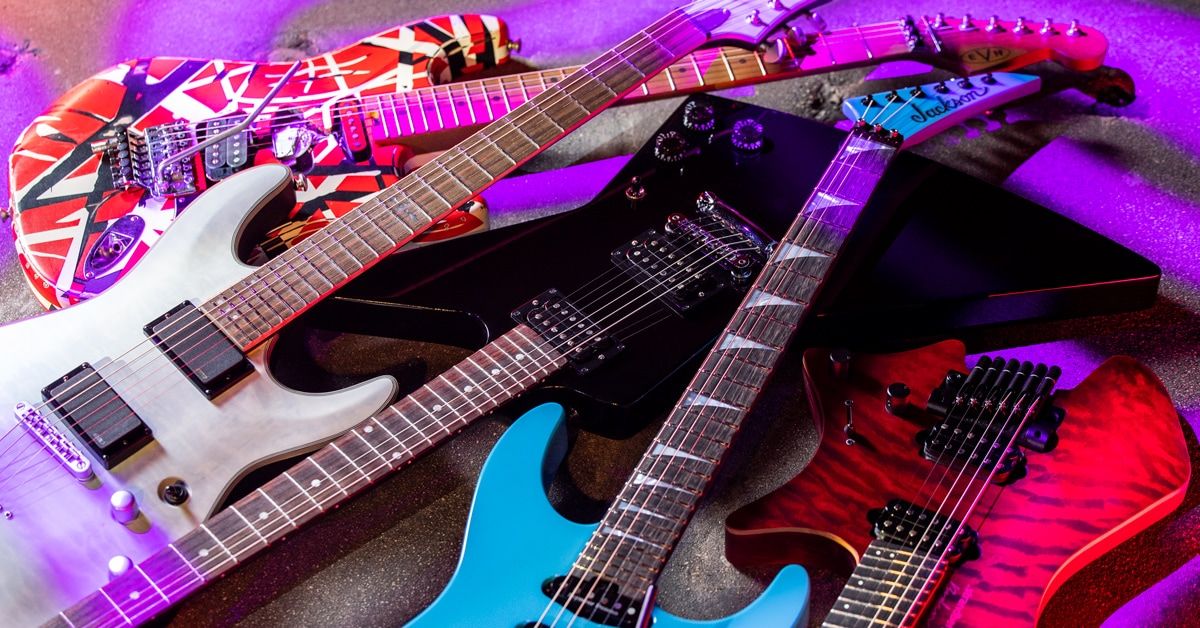

In this article, we’ll share some of the best metal guitars we’ve discovered for 2026, including 6-string, 7-string and signature models. Through a careful combination of pickups, hardware, neck profiles, fingerboard radii and sleek, aggressive bodies promoting unparalleled upper-fret access, these axes are primed to slay the speediest solos and most rampageous riffs.
Whether you play thrash, death, black, doom, groove, nu, progressive, djent or any style of metal in between, these guitars are what sonic nightmares are made of. But first, a story:
The eruption was coming. As far back as Les Paul and Mary Ford’s 1951 hit, “How High the Moon,” guitar enthusiasts were treated to (for the time) lightning-fast sweeps of notes. Years later, classic rock virtuosos such as Jimi Hendrix, Ritchie Blackmore, Alvin Lee, Jimmy Page and others upped the ante for feverish spurts of speed on record, onstage, and, perhaps most importantly, on the pop charts.
Soon, an emerging community of players evolved rock guitar technique to the point of ferocious, mind-blowing intensity. They adopted and reengineered techniques such as sweep picking, tapping, hammer-ons, trills, arpeggios, tremolo-arm dive bombs and other actions to devise fluid, warp-speed solos, licks and riffs. It was an onslaught that captured the imagination of guitar fans, seriously challenged players and transformed popular music culture in the 1980s.
But these shredders needed new tools, modded and hot-rodded … their own machines. For the most part, the guitars loved by their parents and grandparents simply would not do precisely what these speed maestros wanted a guitar to do. It was time for a change.
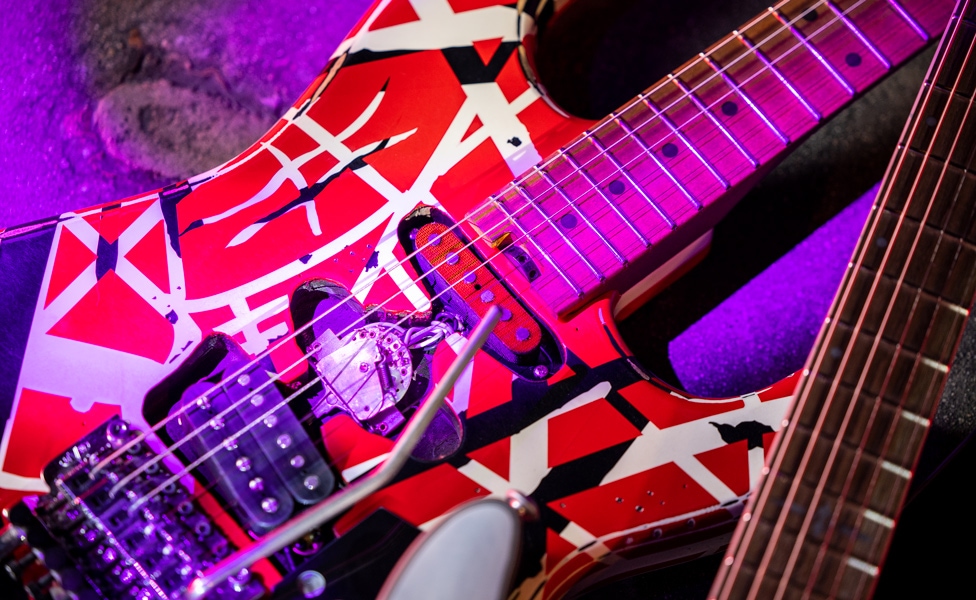
There’s the famous quote from Eddie Van Halen—published in the April 1980 issue of Guitar Player when he was just 23 years old—about the obsession with building his own instruments: “I’m just a punk kid trying to get a sound out of a guitar that I couldn’t buy off the rack.”
Well, Van Halen was an epic visionary, but to be fair, not all guitar makers were unaware of this burgeoning wave of extreme stylists and their performance requirements. Brands such as Charvel, Ibanez, ESP, Schecter, Kramer, Jackson, Dean, B.C. Rich and Carvin were answering the call, and building models that accommodated light-speed fretboard gymnastics.
What did these players want that was different from standard, “off the rack” guitars from Gretsch, Gibson, Fender, Epiphone and other manufacturers of the day? Well, let’s dig into the features that typically distinguish a shred-ready guitar before you embark on your own search for the best guitar for metal.
Table of Contents
How to Choose the Best Metal Guitar
Comparing the Best Metal Guitars of 2026
The Best Metal Guitars
Why We Picked These Guitars as Metal Mavens
FAQs About Metal Guitars
Shop Metal Guitars at Guitar Center
How to Choose the Best Metal Guitar
High-output or active pickups. Pickups are arguably the most important factor determining what any guitar is actually capable of, sonically. For metal, you don’t want feeble pickups struggling to push an amp into overdrive and saturation. You need power and articulation for sounds that don’t get muddy when the gain goes up.
High-output replacement pickup pioneers, such as Larry DiMarzio, Seymour Duncan and EMG’s Rob Turner, have served the metal crowd from the early ’70s onward. You can choose high-energy passive pickups or select from active models that require a power source (typically a 9V battery) to produce enhanced gain, headroom and EQ.
We’ve vetted the instruments included in this article, and they all have metal-ready pickups, whether they’re from one of the manufacturers above or are a proprietary design.
Fixed or tremolo bridges. Hardtail bridges (fixed) are among the most reliable for metal guitars. They offer a balanced combination of tuning stability and sustain, and you can easily go to a drop tuning without needing to balance a—get ready for it—floating system.
Floating bridge systems, such as the original Fender design and Floyd Rose locking tremolos, are extremely expressive. They do things hardtails can’t: let you vary pitches, perform “dive bombs,” incorporate stutters and swoops into solos, and transform conventional melodic passages into high drama. But they also require a bit more maintenance—string changes are trickier on a Floyd Rose than any ol’ hardtail.
Ultimately, the right bridge for you comes down to your style of play, and whether you need the flexibility of a tremolo system or prefer the no-nonsense stability of a fixed design.
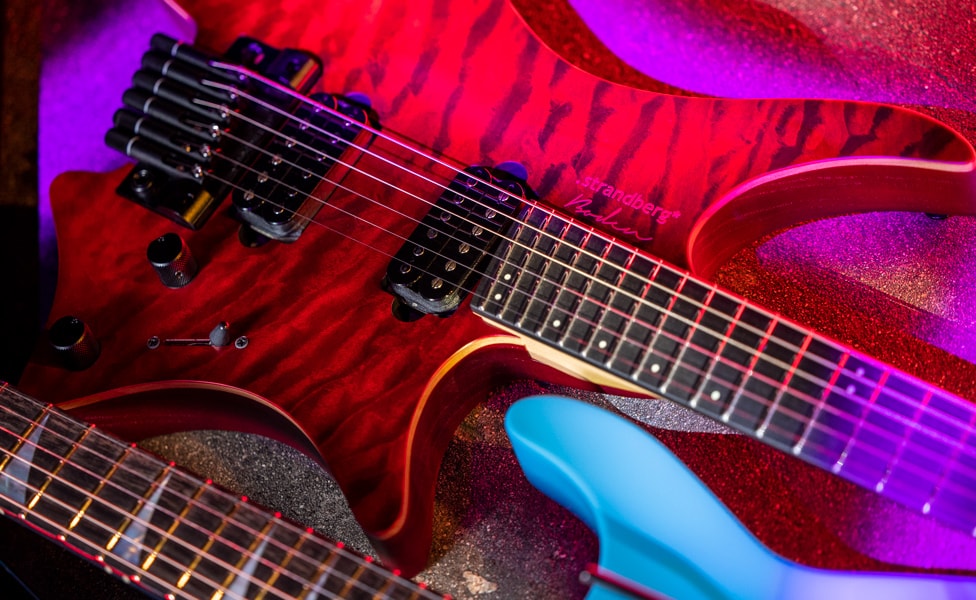
Scale length and string gauge. A scale length (the distance between the nut and the bridge) of at least 25.5" is the sweet spot for shredding. The longer the scale, the more tension imposed on the guitar strings, which provides two very nice benefits: You can set the action low without risking fret buzz, and—in standard tuning—you can use lighter string gauges (.009 or .008) that are easier to bend.
Keep in mind, though, if you intend to tune down for your style of metal, you’ll need thicker strings to make up that lost tension. For example, I use D’Addario 11–56 strings for drop C on a 25.4"-scale guitar. The bottom is really beefy to hold that full step-down, drop-tuned tension, while the top is balanced and feels like a set of 10s in standard tuning on a 25.5" guitar.
24.75" is the standard “Gibson scale,” and you can absolutely play metal on those, too. But you’ll probably want at least a set of 10s for standard tuning and will definitely want to gauge up for anything lower.
Neck profile. Guitars manufactured for metal players usually offer a slim and comfy C profile, or a flatter D profile that provides a more satisfactory foundation for anchoring the thumb.
Some brands offer thin U shapes, while a really innovative company—looking at you, .strandberg*—features a propriety asymmetrical, trapezoidal EndurNeck carve on their guitars. They’re an outlier, though, and you’ll most likely settle somewhere in the C–D range with most metal guitars.
Fingerboard radius. The larger the number, the flatter the curvature you’ll encounter while playing the guitar. A fretboard radius of at least 15" is preferable for shredders, because it accommodates a low action and favors fleet fingers.
A compound radius neck changes the degree of curvature (such as 12"–16") as a player works down the fretboard. It’s comfy for chords up around the headstock and fast for shredding down toward the body.
Frets and fret access. Many shredders prefer guitars with 24 frets, because they want/need to be able to zoom up to the sky-high, dweedly-dweedly notes. In addition, any guitar built for speed should offer a cutaway and a comfy, sculpted neck heel to ensure there are no impediments to that critical upper-fret access.
Another consideration is fret material. More and more these days, guitar companies—especially the metal-oriented ones—are turning toward stainless steel as their fret wire material. The playing feel is smooth and slick, but their durability is their greatest asset. You’ll likely never need to refret a guitar equipped with stainless steel.
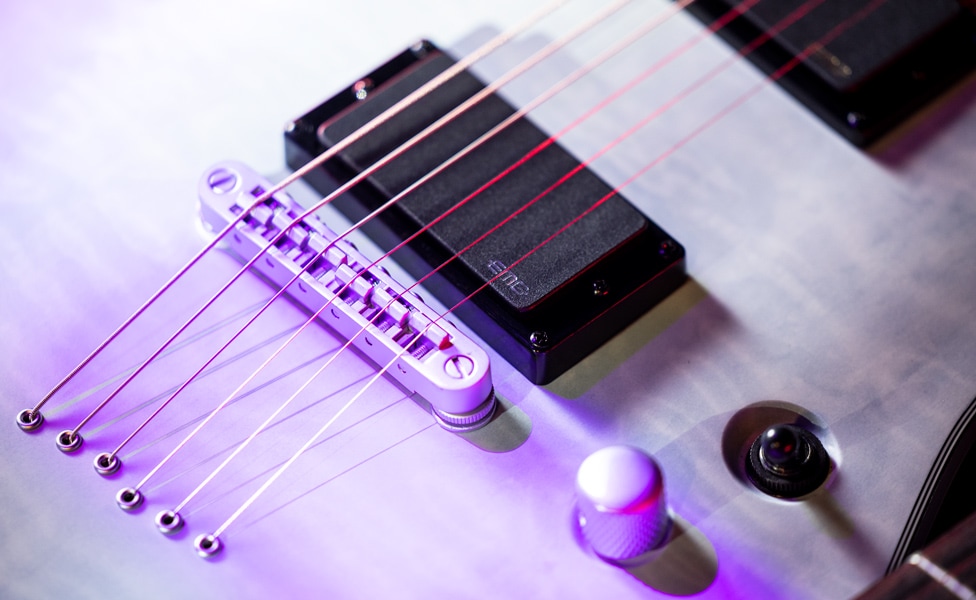
6-string vs. 7-string vs. 8-string. If you plan to engage with any kind of Dream Theater- or Meshuggah-inspired modern progressive metal, having an extended-range instrument is a prerequisite. How low you want to go is entirely up to you.
In my experience, a 6-string can still take you down to C standard or drop A# with heavy enough strings (usually 12s). But for B, you might want to consider a 7-string or baritone six at that point.
Budget. This is the most personal factor when it comes to choosing a metal guitar. We’ve done our best to include guitars ranging from entry level to high end, that way you can see what’s out there and land on what feels right for you (and your wallet).
Keep in mind, you don’t have to ball out on an expensive axe to have an excellent one. Sometimes, a quality setup is all that’s needed to make a good guitar great.
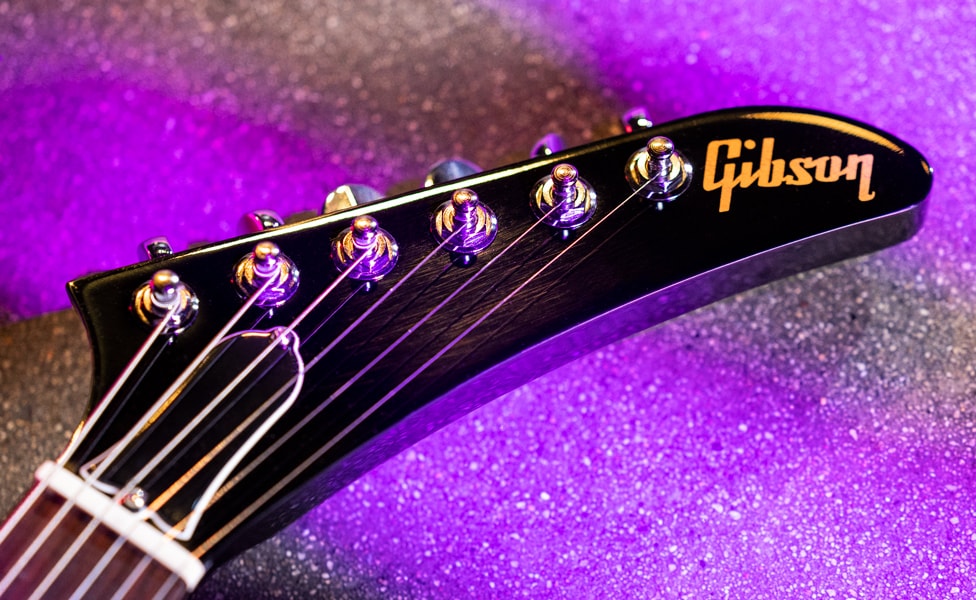
Pointy headstocks. In the 1980s, a pointy headstock was primarily a fashion statement. Few headstocks projected such outright menace as the spike topping a Charvel, Jackson, Ibanez or similar shred guitar. Other headstocks—even the Explorer’s “child safe” rounded point—would leave you defenseless during a zombie apocalypse. The “bayonet” on a Jackson, however, could hold off undead hordes for hours. How metal is that?
Swagger. A guitar with a bold, flamboyant finish won’t improve your technique or tone, but it may inspire you to rock like a hurricane. Since the ’80s, metal soloists have boosted their stage charisma by playing guitars emblazoned with neon colors, geometric designs, animal patterns, bold stripes, faux snake skins, vibrant crackle effects, exaggerated pinstripes and stickers of all types.
Comparing the Best Metal Guitars of 2026
|
Model |
Body |
Neck |
Pickups |
Bridge |
Price* |
|
Basswood |
Caramelized Maple |
Seymour Duncan Alnico II Pro APH-1N (Neck), Seymour Duncan Full Shred TB-10(Bridge) |
Wilkinson WVS130-2P tremolo |
$1,349.99 |
|
|
Mahogany |
Mahogany |
EMG 81/60 humbuckers |
LockTone Tune-O-Matic |
$899.00 |
|
|
Mahogany |
Mahogany |
Epiphone ProBucker Ignite humbuckers |
LockTone Tune-O-Matic |
$899.00 |
|
|
Okoume |
Mahogany |
DiMarzio Dreamcatcher/Rainmaker humbuckers |
Custom John Petrucci Music Man floating tremolo |
$3,899.00 |
|
|
Mahogany |
Maple |
Fishman Fluence Modern humbuckers |
Hipshot fixed bridge |
$4,999.00 |
|
|
Mahogany |
Mahogany |
EMG James Hetfield humbuckers |
TonePros T.O.M. |
$1,599.00 |
|
|
Mahogany |
Roasted maple |
DiMarzio JD Fortitude humbucker |
Hipshot Tone-A-Matic |
$1,799.00 |
|
|
Mahogany |
Maple |
Fishman Fluence Mick Thomson Signature humbuckers |
Hipshot High Mass fixed |
$1,599.00 |
|
|
Basswood |
Maple |
EVH Wolfgang humbucker |
Floyd Rose tremolo |
$2,129.99 |
|
|
Basswood |
Roasted maple |
EVH Wolfgang humbuckers |
EVH T.O.M. |
$649.99 |
|
|
Mahogany |
Mahogany |
’80s Tribute humbuckers |
Nashville Tune-O-Matic |
$2,499.00 |
|
|
Meranti |
Maple |
Quantum set (HSH) |
Double-locking floating tremolo |
$549.99 |
|
|
Meranti |
Maple |
Quantum set (HSH) |
Edge-Zero II floating tremolo |
$949.99 |
|
|
Mahogany |
Maple |
Quantum humbuckers |
Ibanez F106 fixed |
$349.99 |
|
|
Basswood |
Roasted maple |
Fishman Fluence Tim Henson Signature humbuckers |
Gotoh T1502 tremolo |
$1,599.99 |
|
|
Alder |
Maple |
Seymour Duncan JB TB-4 humbucker & Custom Flat Strat SSL-6 single coils |
Floyd Rose 1500 Series tremolo |
$2,349.99 |
|
|
Alder |
Maple |
EMG 81/85 humbuckers |
Floyd Rose 1500 Series tremolo |
$2,729.99 |
|
|
Poplar |
Maple |
Seymour Duncan Blackout humbuckers |
Floyd Rose Special tremolo |
$969.99 |
|
|
Mahogany |
Mahogany |
Schecter USA Synyster Gates Signature & Sustainiac humbuckers |
Floyd Rose 1500 Series tremolo |
$1,999.00 |
|
|
Mahogany |
Mahogany |
EMG 81TW/89R humbuckers |
Floyd Rose 1000 Series tremolo |
$1,249.00 |
|
|
Mahogany |
Maple |
EMG 81/85 humbuckers |
Floyd Rose 1000 Series tremolo |
$1,899.00 |
|
|
Chambered Basswood |
Carbon-reinforced Roasted Maple |
Fishman Fluence Modern humbuckers |
.strandberg* EGS Rev7B tremolo |
$2,299.00 |
Pricing as of September 2026*
The Best Metal Guitars
Whether you’re a student seeking a nurturing and comfortable shred machine, or an experienced metal guitarist looking for a rocket ship to elevate your already formidable chops, we’ve curated the fastest, most popular, gig-proven and artist-approved collection of metal electric guitars to meet everyone’s needs. Let’s plug in …
Charvel Pro-Mod Plus Dinky DK24 HH 2PT E
What to Know:
-
Quintessential Superstrat with tonal flexibility from series/parallel switching
-
Stable Wilkinson WVS130-2P tremolo for all your flitters and flutters
-
Beveled output jack on backside of body keeps your cable out of the way while you play

Shop Now: Charvel Pro-Mod DK24 HH 2PT E Electric Guitar in Raven Black
The metal roots of the Charvel Pro-Mod Plus Dinky DK24 HH 2PT E run as deep as the Mariana Trench. Founder Wayne Charvel and Grover Jackson (who bought the Charvel company in 1978) can quite convincingly be portrayed as the architects of modern, high-quality built-for-speed guitars. (Eddie Van Halen’s iconic “Frankenstein” guitar was made from parts supplied by Charvel.) The Pro-Mod Plus DK24 struts the celebrated Charvel/Jackson Dinky body style, a scalloped lower bout for unfettered access to all 24 frets, a caramelized maple bolt-on neck and fingerboard, two Seymour Duncan humbuckers (Alnico II Pro APH-1N in the neck and Full Shred TB-10 in the bridge), a Wilkinson WVS130-2P tremolo bridge and a choice of elegant finishes, such as Matte Blue Frost, Satin Burgundy Mist and Gloss Black.
Epiphone Explorer ’80s EMG
What to Know:
-
Early thrash metal aesthetic with a classic hockey stick headstock and retro-futuristic body
-
Thin, easy-to-play ’60s SlimTaper neck
-
Active EMG pickups provide brutal output and extreme articulation

Shop Now: Epiphone Explorer '80s EMG in Classic White
A late bloomer, the 1958-born Explorer didn’t see much play until the 1970s, and even then, the model didn’t truly take off until almost the mid-1980s. The Epiphone Explorer ’80s EMG is a tribute to the breakthrough 1984 model, famously associated with James Hetfield and his “So What” and “More Beer” duo of the day.
Stripped of its original passive voice, this guitar’s armed with a set of active EMG 81/60 pickups from the factory—a mod that Hetfield himself made and never second-guessed. The Epi Explorer ’80s EMG’s assertive, angular style evokes a strong sense of nostalgia, while it’s commanding sonic presence and fast playability feel as fresh as ever.
Epiphone Futura RD Custom
What to Know:
-
Defiant body shape and head-turning finish
-
5" scale length, compound radius fingerboard and stainless steel frets
-
Stable locking Grover tuners

Shop Now: Epiphone Futura RD Custom in Midnight Ember Shift
The original 1977 “Research and Development” (RD) model was Gibson’s attempt to make the electric guitar “cool” in the era of the synthesizer. Its space-age, asymmetrical offset body—inspired by Explorers and Firebirds that were so ahead of their time at launch (in 1958 and 1963, respectively)—and Moog-designed electronics with expansion and compression were innovative, sure, but ultimately not as compelling as the brand had hoped. Thankfully, hard rockers and metalheads have gravitated toward the RD’s retro-modern, aggressive-but-not-pointy shape and made it a cult favorite over the years.
Powered by ProBucker Ignite humbuckers, the Epiphone Futura RD Custom is voiced for high-gain hysteria: biting and edgy, articulate and clear. Its Modern C neck and compound radius fretboard enable fluid navigation of savage riffs and leads, while the 25.5" scale length—which is atypical for Gibson/Epiphone—increases tension for more stable drop and down tunings. Aesthetically, the Futura RD receives the classy Custom treatment, with all-over binding and the iconic split diamond headstock inlay.
The Epiphone Futura RD Custom comes in two eye-catching, color-changing finishes: Midnight Ember Shift and Twilight Shift.
Ernie Ball Music Man John Petrucci Majesty 6
What to Know:
-
Designed around John Petrucci’s pursuit of a perfectly playable prog guitar
-
Ultrafast neck and easy-access in-line controls
-
Premium San Luis Obispo craftsmanship

Shop Now: Ernie Ball Music Man John Petrucci Majesty 6 Electric Guitar in Enchanted Forest
Ernie Man Music Man John Petrucci Majesty series guitars come in a dizzying number of drool-worthy wood and finish options, as well as 6-string, 7-string and 8-string configurations. We’ll focus on the Dream Theater fretboard wizard’s Ernie Ball Music Man John Petrucci Majesty 6, which offers comfy body contours, access to all 24 medium-jumbo frets, Petrucci’s signature DiMarzio Dreamcatcher and Rainmaker humbuckers, Fishman Powerbridge piezo saddles, a 20dB boost, coil tapping and mono or stereo output. Playing the Majesty 6 is like riding a champion thoroughbred stallion to victory at Churchill Downs, and, similarly, the price to compete can be rich. Happily, amongst the wide range of Majesty offerings are more affordable models, such as the Sterling by Music Man Majesty. Pro Tip: You can really zero in on nailing the Petrucci vibe by pairing the Majesty 6 with his signature MESA/Boogie amp, the JP-2C.
ESP USA M-II HT
What to Know:
-
One-piece maple neck carved to an Extra Thin U shape
-
Ebony fingerboard with 24 extra-jumbo stainless steel frets
-
Only available at Guitar Center

For the first time in several years, Guitar Center joined forces with ESP to launch exclusive USA M-II HT models in scintillating Psychedelic Sparkle and Pyromancer Sparkle finishes. The M-II HT combines classic double-cutaway style with cutting-edge playability, stability and sonics, featuring: an extremely fast neck, a rock-solid Hipshot hardtail bridge, Gotoh locking tuners, indestructible stainless steel frets and Fishman Fluence Modern humbuckers with push/pull volume and tone controls, plus a 3-way switch. Apart from flashy finishes, the M-II platform has a fairly conservative body shape and a traditional-looking headstock—it isn’t a pointy shredder—but it’s a reliable sleeper that will outplay many comparable guitars.
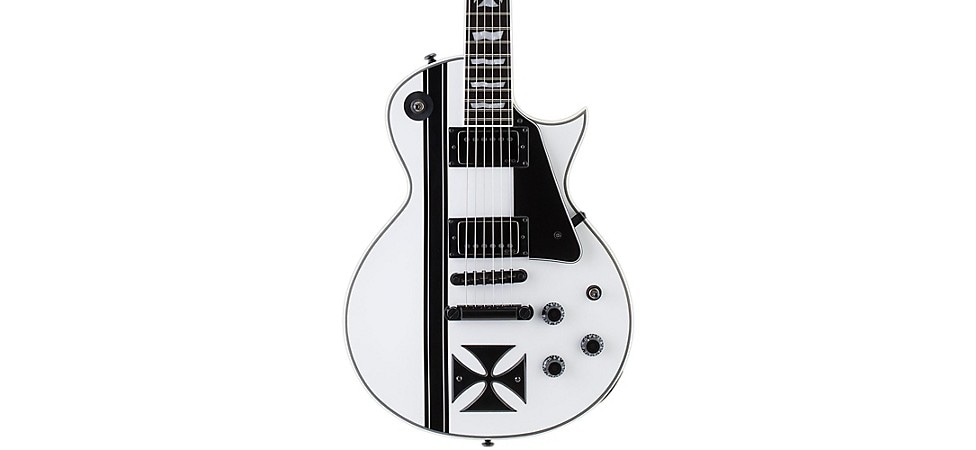
ESP LTD James Hetfield Signature Iron Cross
What to Know:
-
Blends LTD style with some of Papa Het’s idiosyncratic preferences
-
Upper-bout pickup toggle is unwired and replaced by a functional one in the bridge volume knob rout
-
Sports a 24.75" scale length and includes a rugged gig bag
Shop Now: ESP LTD James Hetfield Signature Iron Cross Electric Guitar in Snow White
Metallica’s James Hetfield is far more renowned as a rhythm player than a barnstorming soloist, so his ESP LTD James Hetfield Signature Iron Cross is designed to favor mammoth riffs and thick, powerful chords. The thin U-shaped profile is thicker than most shredders go for, but it’s a great neck for really digging into ferocious licks. There’s unhindered access to all 22 frets—just in case you do want to blast out some note flurries—and an EMG JH Signature set of active pickups ensures your tone is ballsy as all hell.
ESP LTD Joe Duplantier JD-I
What to Know:
-
Vintage-inspired offset body in a slick Silver Sunburst finish
-
Thin U-shaped neck with a 13.7" fretboard radius
-
No-nonsense, single-humbucker configuration

Shop Now: ESP LTD JD-I Joe Duplantier Signature in Silver Sunburst
Superstrats dominate the metal guitar world, making Gojira frontman Joe Duplantier’s signature ESP LTD JD-I—featuring a modified offset shape based on ESP’s XJ body—a rarity that’s all the more enticing. Premium appointments permeate the model, including a Hipshot T.O.M.-style bridge, LTD locking tuners, 3-piece roasted maple neck with ebony fingerboard and extra-jumbo stainless steel frets. All of these add up to an instrument that’s supremely stable and ready to withstand years of your most punishing riffs.
Beyond that, the JD-I doesn’t need much to scream. It’s powered by a singular DiMarzio JD Fortitude humbucker that effortlessly channels Joe Duplantier’s profound tonal fury: a sound that catapulted Gojira to metal legend status with the release of From Mars to Sirius in 2005 and towered over the world at the opening of the 2024 Summer Olympics in Paris.
ESP LTD Mick Thomson MT-I
What to Know:
-
Streamlined metal machine for Slipknot-style tones and beyond
-
Push/pull Fishman Fluence voice switching
-
Locking Gotoh strap buttons

Shop Now: ESP LTD Mick Thomson MT-I Electric Guitar in Obsidian Metallic
Mick Thomson’s signature MT-I electric from LTD brings never-before-seen features to the brand’s popular MH platform. Designed to the Slipknot axeman’s specs, the guitar is outfitted with Hipshot Grip-Lock tuners, a Hipshot High Mass hardtail bridge, a Graph Tech Black TUSQ XL nut, blue Luminlay side dots and, of course, one Fishman Fluence Mick Thomson Signature bridge humbucker. A smooth ebony fretboard with a 12"–16" compound radius facilitates fast fretboard movement, and the thin U-shaped profile fits comfortably in your hand. Aesthetically, the MT-I incorporates a sports car-esque Obsidian Metallic finish that’s both understated and devilishly brooding.
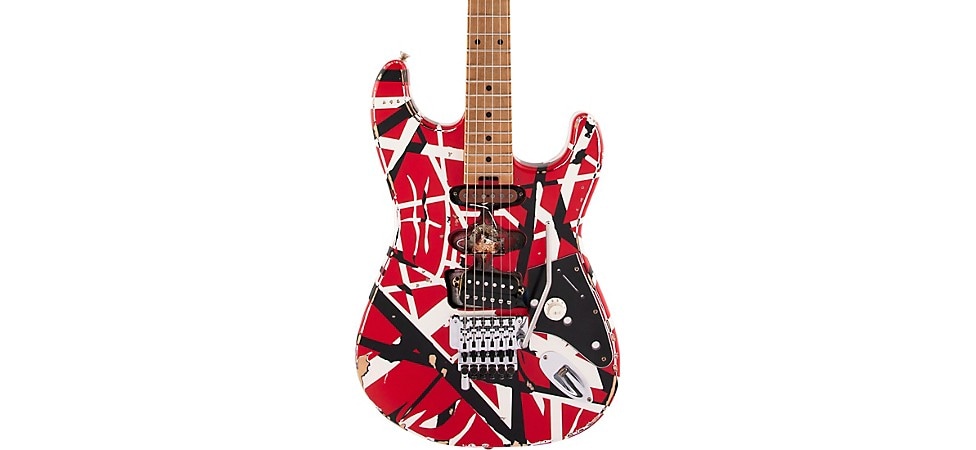
EVH Striped Series Frankie
What to Know:
-
Channels the unchained aura of one of hard rock and metal’s most influential DIY designs
-
Relic’d finish and custom Eddie Van Halen modified C neck profile
-
Onboard D-Tuna lets you effortlessly switch from standard to drop tunings and back
Shop Now: EVH Striped Series Frankie Electric Guitar in White with Black and Red Stripes Relic
The EVH Striped Series Frankie pays homage to one of Eddie Van Halen’s legendary DIY builds—the “Frankie” or “Frankenstrat”—that forged a massive cultural insurrection regarding the guitar platforms scores of metal players choose to create their music. The EVH Striped Series Frankie emulates the battered, carved-out and duct-taped body of the original “workshop” guitar that Van Halen constantly tinkered with, and it includes one EVH Wolfgang humbucker, an EVH-branded Floyd Rose locking tremolo and the EVH D-Tuna. Of course, Eddie Van Halen continued to explore guitar design and tone, and his EVH company offers models from his 5150 to the Wolfgang Special, and even left-handed Stripes and Wolfgangs.
If you're intrigued by the EVH Frankie, check out our Deeper Dive Into the Superstrat to get the full story.
EVH Wolfgang Standard T.O.M.
What to Know:
-
Signature EVH style and high-gain sound in an accessible workhorse format
-
Comfort-cut basswood body with direct-mounted EVH Wolfgang humbuckers
-
Ultrastable stoptail bridge

Shop Now: EVH Wolfgang Standard T.O.M. Electric Guitar in Cream White
The EVH Wolfgang Standard T.O.M. electric may be a “budget” guitar, but it boasts a bevy of top-tier appointments, like a 12"–16" compound-radius baked maple neck. Heat-treated maple is regarded for its resistance to temperature and humidity fluctuations, and EVH shores it up further with graphite reinforcement rods to lock in its road-ready reliability. Besides, you can always make ad-hoc truss rod adjustments conveniently from the easy-access spoke wheel at the base of the neck. The Wolfgang Standard T.O.M. also incorporates a fixed bridge for those who prefer stability and sustain to daredevil dive bombs.
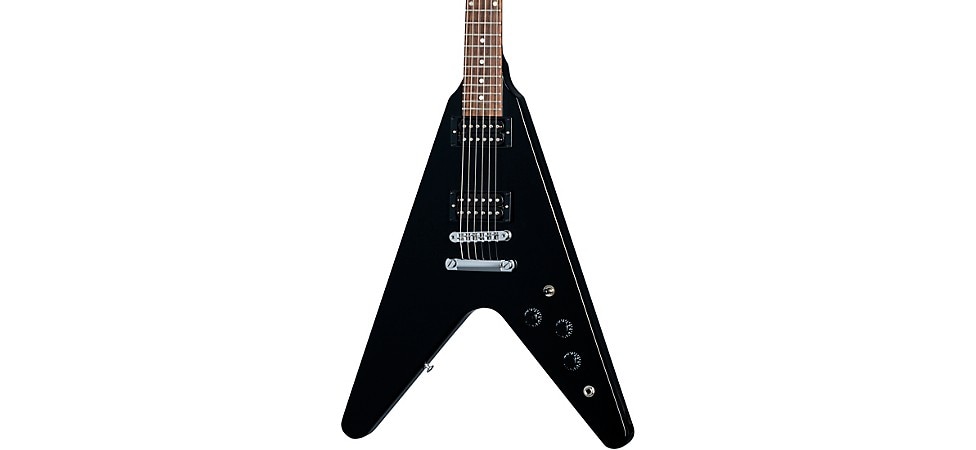
Gibson ’80s Flying V
What to Know:
-
Based on sought-after 1984 models—a nod to a pivotal era in metal guitar history
-
’80s Tribute pickups produce the rich, thick hard rock tones of the day
-
Standard 24.75" Gibson scale length and 12" fingerboard radius
Shop Now: Gibson '80s Flying V Electric Guitar in Ebony
Made in 1958, the Gibson Flying V could have been considered a guitar from mom and dad’s generation by shredders looking for something new and exciting. However, the Flying V’s futuristic and iconic body spoke boldly to some exceptional ’80s metal players (Randy Rhoads, anyone?), and also inspired slight rethinks of the design by other manufacturers. The Gibson ’80s Flying V is based on the company’s 1984 model that was launched to appeal to metal players of the day. The Gibson SlimTaper neck is shred ready, and the Gibson ’80s Tribute pickups capture the roar of the MTV era. Another eminent design from Gibson’s space-age class of 1958—which was also prized and co-opted by metal players and guitar makers during the Ronald Reagan presidency—is the Gibson ’80s Explorer. Fans of mid-century modern trends should also check out the many other Gibson Flying V and Explorer models, and more affordable options are available, such as the Epiphone Flying V and Epiphone Explorer.
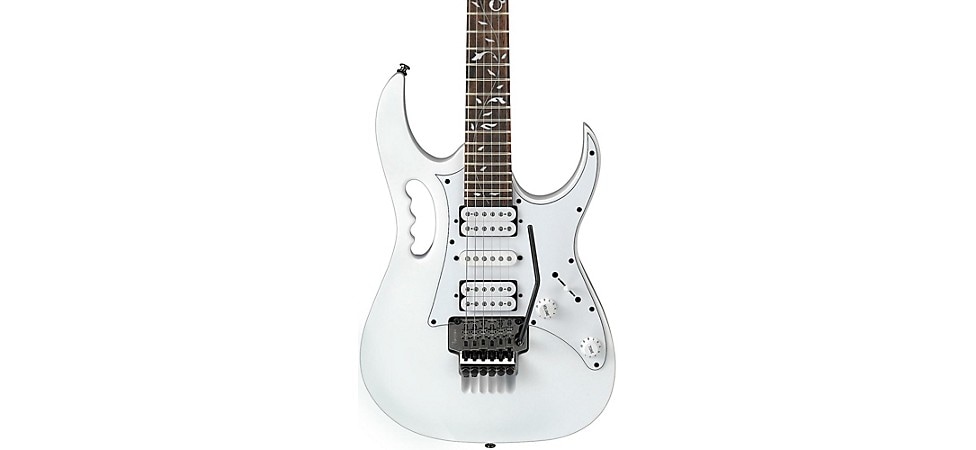
Ibanez JEMJR Steve Vai Signature
What to Know:
-
More accessible version of Steve Vai’s groundbreaking JEM model
-
Balanced meranti body and a versatile HSH pickup configuration
-
Double-locking floating vibrato system for extreme pitch manipulation
Shop Now: Ibanez JEMJR Steve Vai Signature JEM in White
The affordable Ibanez JEMJR Steve Vai Signature makes the transcendent guitarist and composer’s distinctive and immediately recognizable instrument available to more players. The JEM’s distinguishing characteristics are present and accounted for—the Monkey grip, Tree of Life inlay and Lion’s Claw tremolo cavity—as well as shred-approved features, such as a 15.75" fretboard radius, a 25.5" scale length, an HSH pickup configuration, access to all 24 frets and a thin, flat Wizard III neck. If you’d prefer to go "upscale Vai," check out the Ibanez JEM77P or Ibanez PIA3761 Steve Vai Signature.
To learn even more about the Ibanez JEM, check out A Guide to the Ibanez JEM.
Ibanez Nita Strauss Signature JIVAJR
What to Know:
-
Blends S Series performance with custom artist details
-
Ultrafast Wizard III neck with luminescent side dots
-
Quilted maple top finished in Deep Sea Blonde

Shop Now: Ibanez Nita Strauss Signature JIVAJR Electric Guitar in Deep Sea Blonde
After joining Alice Cooper’s band in 2014, the hurricane that is Nita Strauss has captivated rock audiences and blown the minds of guitarists—ultimately becoming Ibanez’s first female signature artist and the featured player for Guitar Center’s 2019 Guitar-A-Thon. The Ibanez Nita Strauss Signature JIVAJR electric builds upon the S Series foundation—touted for its razor-thin body and molded contours—with modifications to suit her own preferences. The JIVAJR contains a trio of Quantum pickups in an HSH layout, a low-profile Zero-Edge II floating vibrato system and a sleek ebony fretboard adorned with Strauss’ signature Beaten Path inlay.
For more of Ibanez's top metal-leaning axes, be sure to check out The Best Ibanez Guitars for Metal.
Ibanez RG6003FM
What to Know:
-
Delivers premium-looking (and feeling) RG specs at an entry-level price
-
Flamed maple top, Quantum humbuckers and fast Wizard III neck
-
Only available at Guitar Center

Shop Now: Ibanez RG6003FM Electric Guitar
For three decades, the high-performance Ibanez RG has inspired metal players to achieve greater heights of speed, as well as elevate their riff, lick and song composition. The Ibanez RG6003FM brings on the same flat, thin Wizard III neck used for the Steve Vai and Nita Strauss signature models, but struts its own Ibanez Quantum humbuckers and a fixed bridge.
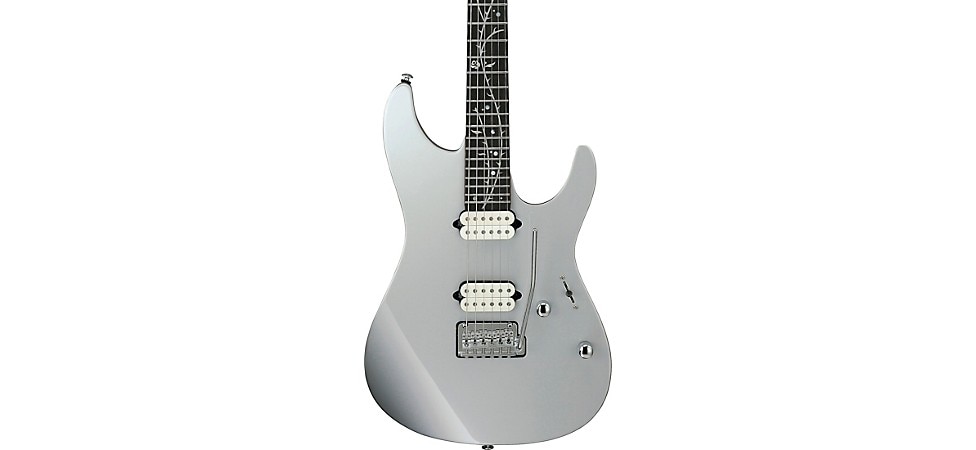
Ibanez TOD10 Tim Henson Signature
What to Know:
-
Fishman Fluence pickup voicings and an expressive Gotoh T1502 vibrato bridge
-
Stainless steel frets and luminescent side dots
-
Features Henson’s signature Tree of Death inlay
Shop Now: Ibanez TOD10 Tim Henson Electric Guitar in Classic Silver
Based on an Ibanez AZ model, the Ibanez TOD10 Tim Henson Signature celebrates the Polyphia guitarist with a collaborative design that features his signature Fishman Fluence pickups, a 25.5" scale length, a Gotoh T1502 tremolo bridge and an Oval-C neck shape. Further personalizing his signature model, Henson opted to add thorns to Ibanez’s iconic Tree of Life fretboard inlay, calling it the "Tree of Death."
Jackson American Series Soloist SL3
What to Know:
-
Designed for hard rockers who crave untamed playability and tonal versatility
-
Through-body neck construction enhances sustain
-
Seymour Duncan HSS pickup configuration

Shop Now: Jackson American Series Soloist SL3 Electric Guitar in Gloss Black
Grover Jackson is one of the most influential and important designers of high-performance guitars, and the Jackson American Series Soloist SL3 is not only the first American-built Jackson model for many years, it also carries the pedigree of the company’s decades-long commitment to producing tools for extreme-velocity players. The Soloist SL3 instigates maximum speed and sonic mayhem with a 12"–16" compound radius fretboard, a 25.5" scale length, 24 frets, a Floyd Rose 1500 double-locking tremolo and Seymour Duncan pickups.
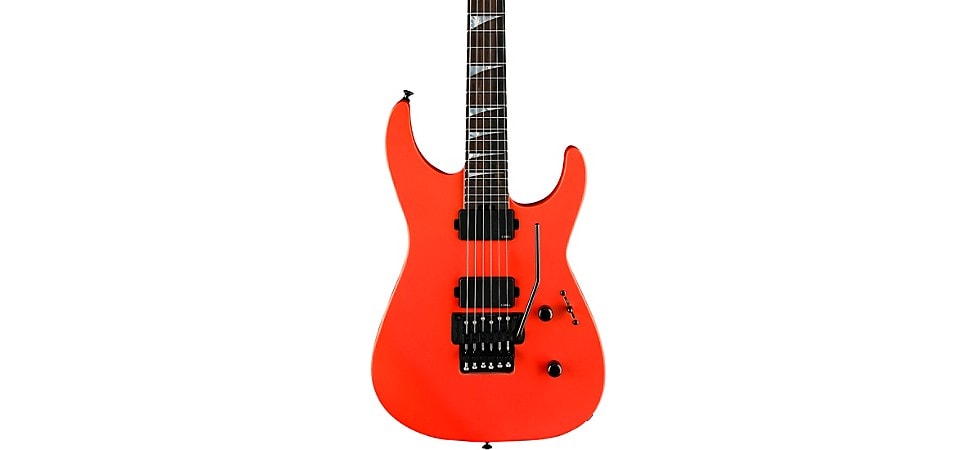
Jackson American Series Soloist SL2MG
What to Know:
-
Extreme metal Soloist built for output, articulation and all-out sonic assaults
-
Active EMG humbuckers and Gotoh MG-T locking tuners
-
Easy-playing compound radius fretboard
Shop Now: Jackson American Series Soloist SL2MG Electric Guitar in Satin Lambo Orange
The Jackson Soloist has been a hard rock and metal mainstay for over 40 years. Superior playability is an inherent quality of this Superstrat, available in both floating Floyd and hardtail Hipshot versions—the American Series Soloist SL2MG and SL2MG HT, respectively. A razor-sharp headstock and shark fin inlays are an aesthetic giveaway that this machine is engineered for elite performance, and EMG 81/85 pickups certify the notion. Jackson tops it off with stainless steel frets and a compound 12"–16" fretboard radius assisting smooth bends, easy chording and white-hot lead lines.
Jackson X Series Rhoads RRX24
What to Know:
-
Inspired by Randy Rhoads’ legendary custom Jackson commission
-
Through-body maple neck provides extra sustain
-
Active Seymour Duncan humbuckers
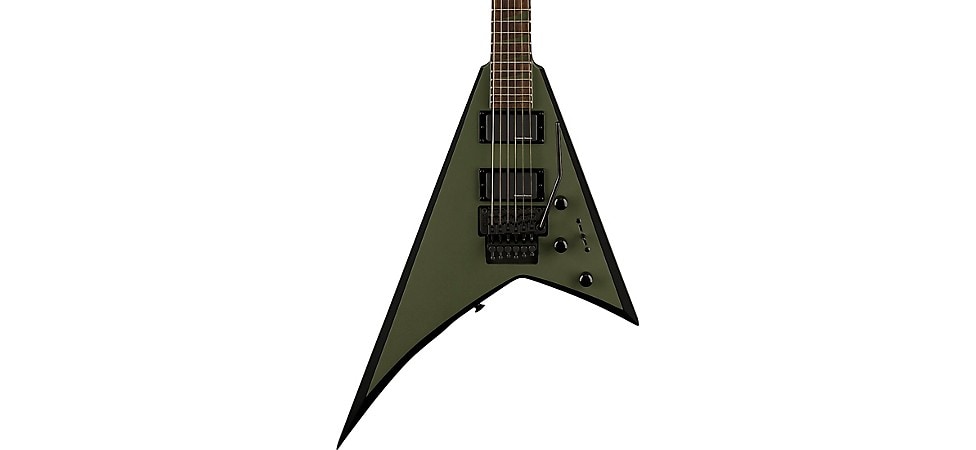
Shop Now: Jackson X Series Rhoads RRX24 Electric Guitar in Army Drab with Black Bevels
An otherworldly alliance of guitarist Randy Rhoads, designer Grover Jackson and his team, and inspiration from the original Gibson Flying V created one of the most distinctive and thrilling metal guitars of the shred era. (Of course, it didn’t hurt that a brilliant player such as Rhoads was rocking it.) The Jackson X Series Rhoads RRX24 continues to hold Rhoads’ design DNA in its soul, and at an affordable price. The RRX24 includes a 12"–16" compound radius fretboard, 24 jumbo frets, a 25.5" scale length and two active Seymour Duncan Blackout pickups.
Schecter Guitar Research Synyster Custom-S Relic
What to Know:
-
Logo-etched bridge pickup cover
-
Gold pearloid SYN/Deathbat inlays
-
Wafer-thin C-shaped neck profile
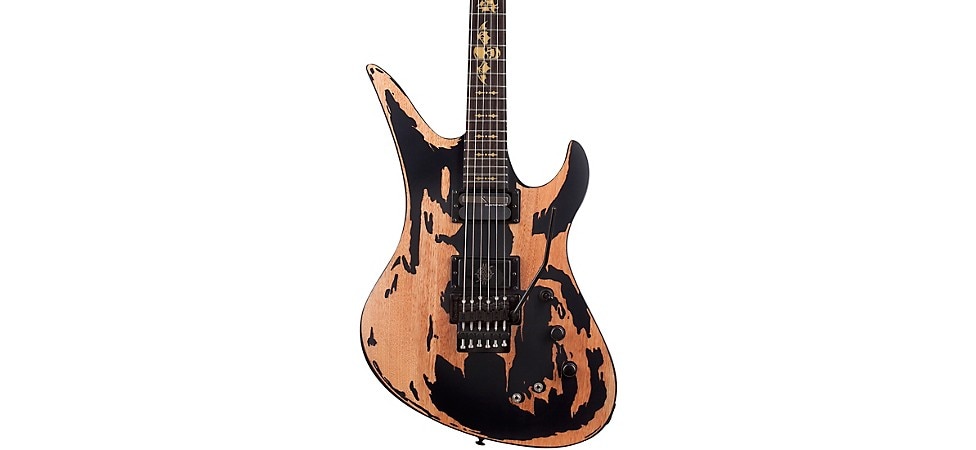
Shop Now: Schecter Guitar Research Synyster Custom-S Relic in Distressed Satin Black
A7X riff maestro Synyster Gates is a longstanding Schecter devotee who’s had a signature Custom-S shred stick with the metal-centric brand for years. Rocking a brash road-worn look for the first time, the Schecter Synyster Custom-S Relic is “a little piece of heaven” for those who favor its aggressive body shape, Floyd Rose tremolo system, Sustainiac neck pickup and one-of-a-kind Deathbat inlay. Its beaten relic finish is illustrative of over two decades of contemporary metal stewardship, and seemingly a nod to Synyster Gates’ ongoing, unbreakable legacy as a multi-platinum guitar talent.
For a look at more of Schecter's metal axes, check out The Best Schecter Guitars for Metal.
Schecter Guitar Research Hellraiser C-1 FR
What to Know:
-
Long-running metal workhorse known for shred-ready playability and dependable performance
-
Thin C-shaped neck and abalone Gothic Cross inlays
-
Push/pull volume controls
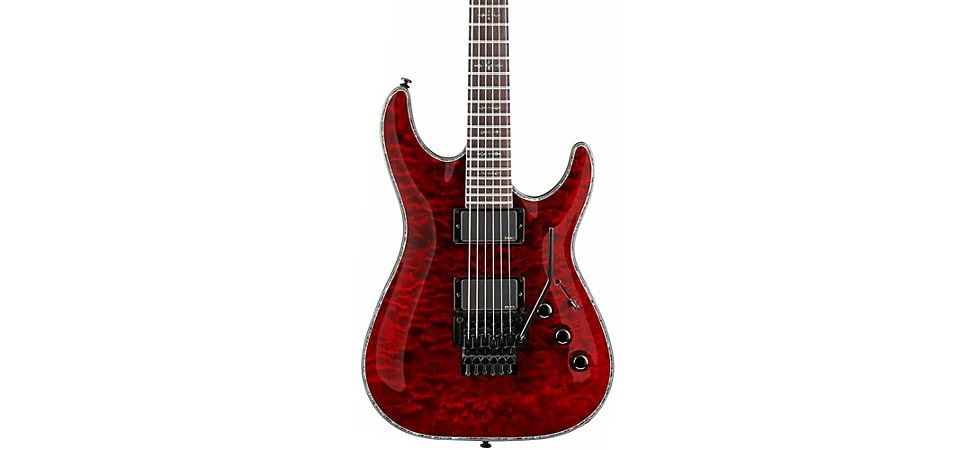
Shop Now: Schecter Guitar Research Hellraiser C-1 FR in Black Cherry
The Schecter Guitar Research Hellraiser C-1 FR is definitely designed to evoke the infernos of hades—as least as far as ferocious metal guitar playing is concerned—with a 25.5" scale neck, 24 extra-jumbo frets, a Floyd Rose 1000 Series tremolo system, and active EMG 81TW and EMG 89 pickups.
Wylde Audio Warhammer FR Norse Dragon Bullseye
What to Know:
-
Undeniably bold, brash aesthetic
-
Active EMG pickups and a Floyd Rose 1000 vibrato system
-
Custom neck profile built for breakneck speed
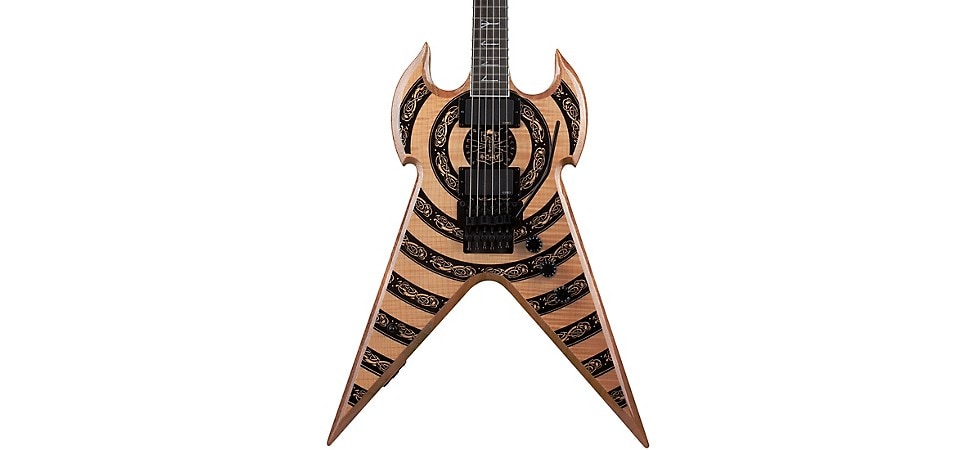
Shop Now: Wylde Audio Warhammer FR Norse Dragon Bullseye in Rawtop
Smithed by the metal-savvy luthiers at Schecter, Zakk Wylde’s Wylde Audio line of axes has been deliberately honed for shredders looking to embark on a blessed hellride into victory or Valhalla. While it’s not a “signature” model in the traditional sense, the double-cutaway Wylde Audio Warhammer is built to the Black Label Society/Ozzy virtuoso’s exacting specs. From Viking-inspired aesthetic appointments like white pearloid “runes” inlays and a flamed maple top featuring a Norse Dragon graphic to EMG 81/85 pickups and a Zakk “C” neck with a 14" fingerboard radius, it’s the ideal tool for your sweeps, pinch harmonics and earth-rumbling chugging riffs alike. Fire up your sonic brew with Warhammer, or let either of its Wylde Audio Norse Dragon Bullseye siblings—Nomad or Barbarian—set you free.
.strandberg* Boden Metal NX 6 Tremolo
What to Know:
-
Versatile Fishman Fluence Modern humbuckers
-
Flat-edged, asymmetrical EndurNeck promotes a loose, relaxed grip
-
Headless design and chambered body make it extremely lightweight

Shop Now: strandberg Boden Metal NX 6 Tremolo Electric Guitar in Black Granite
Much like metal guitarists and shred-devoted guitar makers disrupted the guitar scene in the 1980s, .strandberg*’s adventurous, headless designs have started a bit of a wave with instrumental prog sensations (Plini), female shredders (Sarah Longfield) and even some old-school virtuosos (Mike Keneally). The .strandberg* Boden Metal NX 6 Tremolo is a modern, eye-catching design that is as comfortable to play as it is visually striking. The Boden Standard NX 6 features a 20" fretboard radius, 24 medium-jumbo fanned frets, an HH pickup configuration and a .strandberg* EGS Rev 7B tremolo. These guitars appear to delight iconoclasts of all styles, as well as modern prog players, math rock disciples, fusion fiends, metalheads and more. Furthermore, as headless guitars in general appear to be reemerging, take a peek at models from Ibanez, Steinberger, Traveler, Legator and other makers.
Why We Picked These Guitars as Metal Mavens
In addition to getting hands-on with as many guitars as we can, we take a close look at each instrument’s features, specifications and overall value, as well as how popular different models are with our customers. This helps us decide what to highlight in a short list of the best guitars suited for metal.
We take the cold sales data into consideration, but more importantly, we look at the reviews people leave. If a guitar is averaging 4+ stars with a decent sample size, it’s fair to say it’s resonating with players.
There’s also the consideration of how prominent some of these designs are in the metal zeitgeist—a Randy Rhoads V, for instance, is a symbol of high-gain debauchery. Whichever you choose, you’ll end up in good company with like-minded players.
FAQs About Metal Guitars
What is the best metal guitar for beginners?
The best metal guitar for a beginner is going to be the one that looks cool and stirs something inside them when they see it; that feels comfortable (i.e., their fretting hand feels relaxed and natural around the neck, and the forearm of their picking hand comfortably rests on the guitar’s body); and is within their budget.
What might tick all those boxes is the Guitar Center-exclusive Ibanez RG6003FM, previously featured in this article.
What tuning(s) do metal guitarists use?
All of them. But seriously, there’s no one-size-fits-all tuning for metal. Tony Iommi played in C# standard on Black Sabbath’s most legendary work. Metallica used E standard on their most influential material. Meshuggah plays 8-strings tuned down a half step from standard. Much of Opeth’s heaviest material is in E standard or drop D. Mastodon tends to live around D standard and drop C.
Contemporary prog metal group Monuments frequently employs variations of DADGAD (among others) tuned down and transposed for 7- or 8-string guitars: Bb-F-Bb-Eb-F-Bb-Eb and F-Bb-F-Bb-Eb-F-Bb-Eb. And the list goes on and on …
To narrow things down, start by learning some of your favorite band’s music in the tuning they use. Your personal preferences should naturally evolve from there.
Are signature metal guitars worth it?
Signature metal guitars are worth it to get some unique specs typically not found on regular production models. These might simply be cosmetic, such as one-off finishes or signature inlays, or more sonically impactful, like custom pickups. You can even enjoy a signature guitar without necessarily being a fan of the artist—just sayin’.
Shop Metal Guitars at Guitar Center
At the end of the day, the best metal guitar for you depends on your playing style and preferences, such as whether you want active or passive pickups, a tremolo or fixed bridge, six or seven strings, and more. No matter how you play or how you like to sound, though, there is a guitar right now that’s calling your name. We hope this list helps you find it.
From old-school shred machines and ’80s-approved guitars built for virtuosos and velocity to radical new designs, today’s metal players have an incredible number of choices available. And some models offer even more flexibility by providing 6-string, 7-string and 8-string versions. All of this means that no metal player should ever need to get as frustrated with “off the rack” guitars as Eddie Van Halen was back in the late 1970s.
Be sure to also check our Used Guitars section, as you might discover an ’80s ESP George Lynch Signature Tiger, a “cult classic” Fender HM Strat or a very pointy B.C. Warlock just waiting to be yours.
If you're in the market to upgrade your rig, read through our recommendations for the Best Guitar Amps for Metal.
Written By: Michael Molenda
Michael Molenda is a content strategist, editor and writer for Guitar Center, where he has worked since 2022. He is the longest-serving Editor in Chief of Guitar Player (1997-2018), and former Editorial Director of Bass Player, EQ, Keyboard, Electronic Musician, Gig and Modern Drummer. A guitarist, drummer, bassist and producer, Mike co-owned three pro recording studios in San Francisco, and performs with Surf Monster and The Trouble With Monkeys.
Recently Added to Buying Guides
Be the first to know about exclusive offers, tips and more.

866-498-7882 English
877-687-5402 Español