Refine Your Results
Availability
Brands
No matching Brands.
Condition
Price
Series
No matching Series.
Financing
No matching financing.
Savings & specials
No matching savings.
More ways to shop
No matching deals.
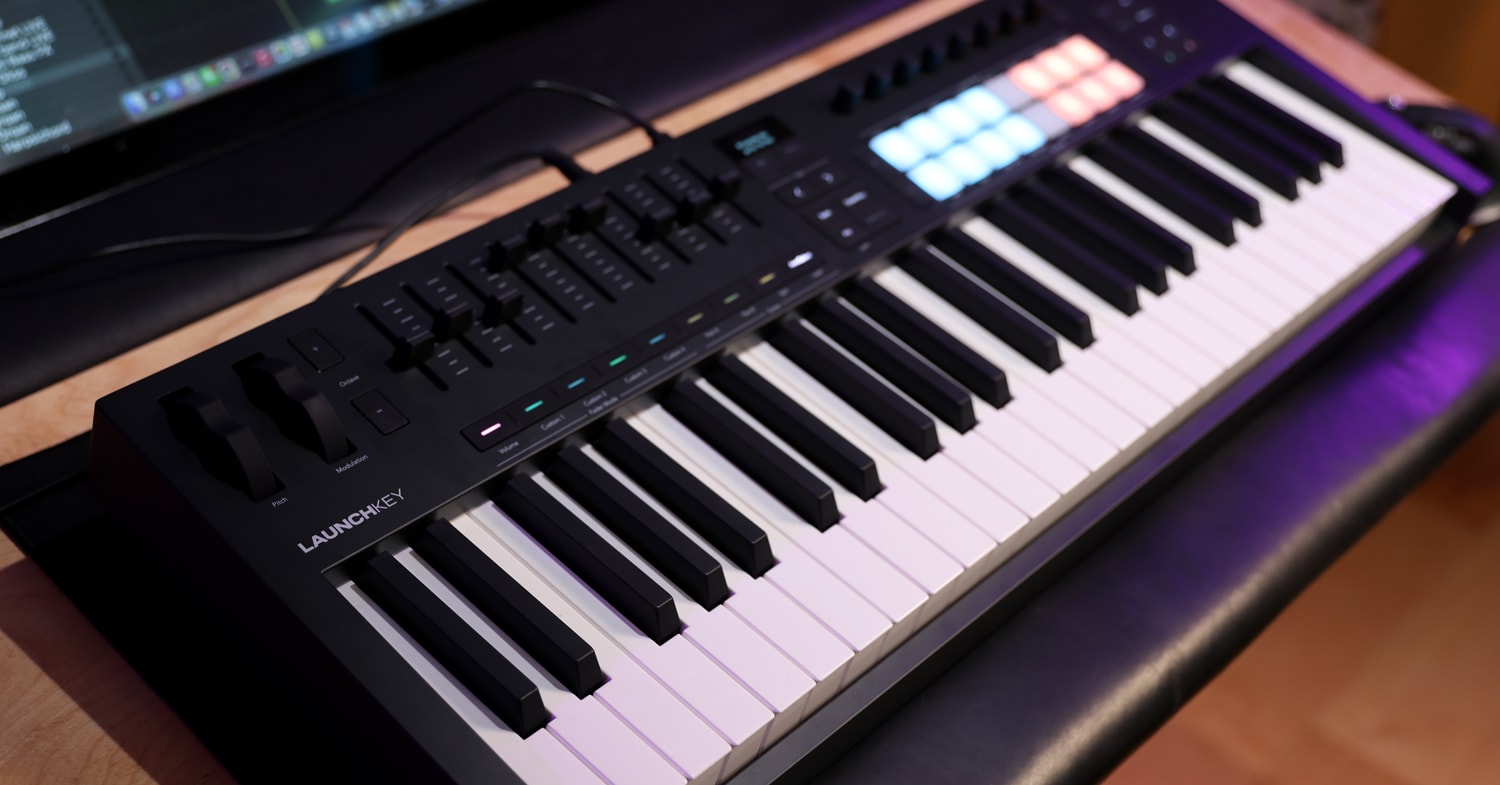
The MIDI controller is the command center of any modern music production setup. Whether you’re programming beats, performing synth lines or triggering loops live, a good MIDI controller gives you the tactile feedback and real-time control that a mouse simply can’t match. From compact 25-key models to full-sized 88-key controllers with faders and pads, there's something for every producer, performer and songwriter. Top brands, such as Akai, Arturia, Novation, M-Audio and Native Instruments continue to push the category forward, offering everything from plug-and-play simplicity to deep DAW integration. If you're building a home studio or expanding your live rig, a MIDI controller is a must-have.
What makes a MIDI controller essential is the way it connects you to your software. Velocity-sensitive keys give you expression when playing virtual instruments, while assignable knobs and faders offer quick access to volume, filter sweeps, panning and automation lanes. Many models feature RGB pads for finger drumming, sample launching or clip control inside your DAW. If you're using Ableton Live, FL Studio, Logic or Pro Tools, chances are there's a controller designed specifically with your workflow in mind.
Looking for something portable for on-the-go sketching or a full keyboard with weighted keys for piano realism? There’s a controller out there that fits how—and where—you make music. Producers like Illenium, Kenny Beats and Dabin all rely on MIDI controllers to shape their sound in real time.
No—but it helps a lot. You can click in notes with a mouse, but a MIDI controller makes the process faster, more intuitive and expressive. It’s especially useful for playing chords, recording performances or automating effects live.
It depends on your space and goals. A 25-key controller is great for portability and simple parts. A 49- or 61-key layout gives you more range for two-handed playing or full performances. Most beginners start with 49 keys, but you can go bigger or smaller depending on how you plan to use it.
No matching Brands.
No matching Series.
No matching financing.
No matching savings.
No matching deals.
2257-2257 out of 2257 products
Available at:Round Rock, TX
Condition: Good
Buying Guides
Thank you for signing up!
.jpeg)